
Comparing 20kW Home ESS Solutions for Whole-Site Resilience
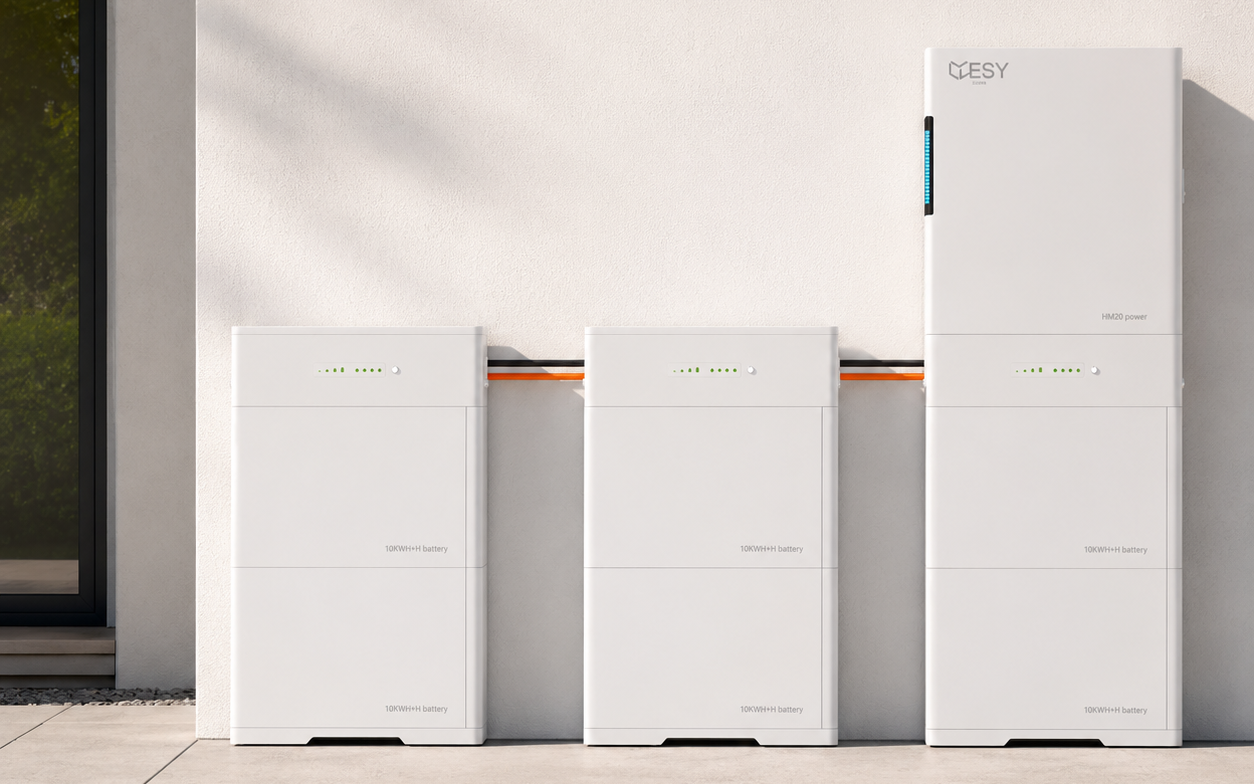
A 20kW home ESS solution can support whole-site power needs when paired with suitable battery capacity, solar input, and load management. A typical configuration combines a 20kW inverter with 40–100kWh LFP storage, achieving 94%–98% conversion efficiency and supporting residential, agricultural, and small commercial applications. The right system depends on outage duration, peak loads, PV capacity, and future expansion requirements.
A 20kW energy storage system provides a power level above standard residential batteries, which commonly range from 5kW to 10kW. This higher output allows multiple high-demand devices to operate together, including HVAC equipment, water pumps, refrigeration units, workshops, and EV chargers. In North America and Europe, many whole-home backup projects installed after 2020 have moved toward 15kW–30kW inverter classes because household electricity consumption has increased with electrification.
The inverter rating determines how much power can be delivered at one moment, while the battery determines how long that power can continue. A 20kW inverter connected to a 50kWh battery can theoretically provide 2.5 hours of operation at maximum output, while the same inverter connected to 100kWh storage can extend operation close to 5 hours under full load.
A 20kW ESS should be evaluated by the relationship between inverter output, usable battery energy, and average site consumption rather than inverter size alone.
Battery selection creates major differences between ESS solutions. Most modern systems use lithium iron phosphate (LFP) cells because of their long cycle life, stable thermal performance, and suitability for stationary storage. Many LFP battery products are rated for 6,000–10,000 cycles at 80% depth of discharge. With one full cycle per day, this corresponds to approximately 16–27 years of theoretical service capability.
For properties requiring longer backup periods, larger storage configurations are commonly selected. A system using an expandable 94.86kWh battery storage system can provide significantly longer operating time compared with standard residential battery packages, especially when supporting mixed residential and commercial loads.
A comparison of typical configurations:
| Inverter Output | Battery Capacity | Approximate Full Load Runtime |
|---|---|---|
| 20kW | 40kWh | About 2 hours |
| 20kW | 60kWh | About 3 hours |
| 20kW | 94.86kWh | About 4.5–5 hours |
The battery size also affects solar utilization. A larger battery allows more midday solar production to be stored instead of exported to the grid. For example, a 25kW solar array can generate approximately 100–150kWh per day depending on location and weather conditions. Matching this production with sufficient storage can increase self-consumption rates from around 40%–60% to more than 80% in many residential applications.
Solar integration design affects overall system efficiency. ESS solutions generally use either AC-coupled or DC-coupled architectures.
| Architecture | Characteristics | Typical Application |
|---|---|---|
| AC-coupled | Works well with existing PV systems | Solar retrofit projects |
| DC-coupled | Reduces conversion steps | New solar + storage installations |
DC-coupled systems can reduce energy conversion losses because solar electricity can charge the battery before passing through an inverter stage. Depending on equipment design, the efficiency improvement can reach approximately 2%–5%.
Load management determines how effectively a 20kW ESS supports a complete site. Instead of treating all electrical equipment equally, energy management systems divide loads according to operating requirements.
| Load Type | Examples | Priority |
|---|---|---|
| Critical | Refrigerators, communication devices, medical equipment | Continuous supply |
| Essential | Heating, lighting, water systems | Controlled supply |
| Flexible | EV charging, pool pumps, workshop tools | Scheduled operation |
During grid outages, automatic transfer systems can switch to backup power within milliseconds. Advanced controllers can adjust output according to battery state of charge, solar availability, and load demand. Proper load scheduling can extend backup duration by 20%–40% compared with unmanaged operation.
The electrical characteristics of the site also affect system design. Residential properties often have short periods of high demand caused by appliances starting simultaneously. Motors, compressors, and pumps may require 2–3 times their rated power during startup. Therefore, a 20kW ESS must consider surge capability in addition to continuous output.
For example, a heat pump rated at 5kW may require 10–15kW for a short startup period. If several motor-driven devices start together, the inverter must maintain voltage stability without disconnecting.
Whole-site backup requires sufficient surge capacity, not only a high continuous power rating.
Installation environment is another factor influencing long-term performance. Outdoor ESS cabinets are commonly designed for operating temperatures between -20°C and 50°C, while battery cells perform most efficiently around 15°C–35°C. In colder climates, heating systems may consume 3%–8% of annual stored energy, while hot environments may require additional cooling.
Indoor and outdoor installations have different advantages:
| Installation Type | Advantages |
|---|---|
| Indoor ESS | Better temperature stability, easier inspection |
| Outdoor ESS | Saves indoor space, suitable for farms and larger properties |
Safety functions are included in most commercial ESS platforms. A complete 20kW system normally contains:
-
Battery management system monitoring voltage, temperature, and current.
-
Overcurrent protection.
-
Short-circuit protection.
-
Thermal control.
-
Ground fault monitoring.
-
Remote operation interface.
Battery management systems collect thousands of operating points from individual cells. A typical battery pack may contain hundreds of cells, and the BMS continuously balances cell voltage differences to maintain consistent performance.
System expansion capability has become important because electricity demand changes over time. A homeowner may install a smaller battery in 2026 and add additional modules later for EV charging, electric heating, or increased solar capacity. Modular battery designs allow storage expansion without replacing the entire ESS platform.
The financial evaluation of a 20kW ESS depends on equipment cost, electricity prices, outage frequency, and expected service life. A larger battery requires higher upfront investment, but it can provide more energy independence and reduce reliance on grid electricity during peak pricing periods.
A simplified comparison:
| System Type | Initial Installation | Expansion Ability |
|---|---|---|
| Fixed-size ESS | Lower complexity | Limited |
| Modular ESS | Higher flexibility | Easier future upgrades |
Small commercial properties such as farms, offices, and workshops often require different operating patterns from homes. A farm may need continuous power for refrigeration and irrigation, while a workshop may require short periods of high power demand. The same 20kW inverter platform can serve both applications when battery size and load control are configured correctly.
Communication functions also influence daily operation. Modern ESS systems support monitoring through mobile applications and web platforms. Users can view battery state of charge, solar production, consumption trends, and system alerts. Remote monitoring reduces maintenance time and helps identify abnormal operation before performance decreases.
A 20kW ESS with scalable storage, high-efficiency inverter technology, and intelligent load control can support a wide range of whole-site applications. Systems designed with sufficient battery capacity, solar compatibility, and modular expansion options are better suited for long-term property energy management. More information about a residential 20kW ESS configuration is available through the HM20 residential ESS solution.
Ready to design your next chapter?
Join the next 12-week cohort. Applications close when seats fill.